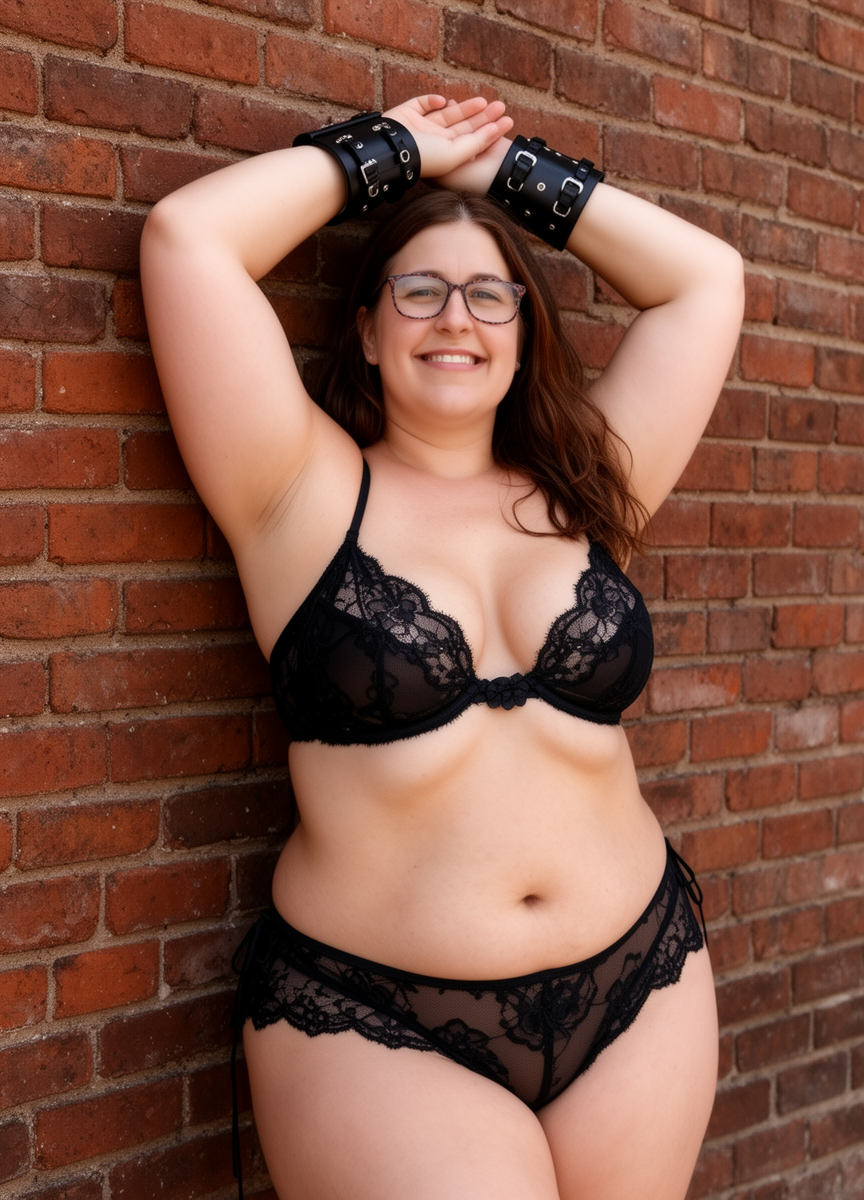

Induced lactation, explained without the awkward silence.
project PUMP! is a friendly, practical resource for curious adults exploring induced lactation and adult nursing — hosted by Liz 'The Milky Mama', who believes the weirdest-sounding questions usually have the most normal answers.
Two terms, demystified
You don't need a medical degree or a partner already on board to understand what these actually involve. Here's the plain-English starting point.
Building milk supply on purpose
The process of stimulating your body to produce milk outside of pregnancy — usually through a combination of regular pumping or nursing stimulation, and sometimes hormonal support guided by a provider. People pursue it for all kinds of personal reasons, and it's more accessible than most first assume.
Adult nursing relationships
Short for "adult nursing relationship" — an arrangement between consenting adults built around nursing as part of how they connect. Motivations range from intimacy and comfort to curiosity and routine. We cover the logistics, the conversations, and the practical realities.
Four ways into the topic
Pick whichever door makes sense for where you're starting from.
Getting started
What actually happens week to week, and how long real timelines tend to take.
Pumps & gear
Honest comparisons of pumps, flanges, and fit — without the affiliate-link fluff.
Talking to a partner
Scripts and framing for a conversation that feels less scary than you're picturing.
Myths, debunked
The claims people repeat most, checked against what's actually true.
"You are allowed to be curious about your own body without having a five-step justification ready."
— Liz 'The Milky Mama', on the whole reason this site exists
What actually happens, from day one
A realistic timeline of the induced lactation process — treat these as ranges, not deadlines. Consistency matters far more than any single session.
Set your routine, not your expectations
Pick a pumping or stimulation schedule you can actually stick to — most people start with 3–4 sessions a day, 10–15 minutes each. The schedule you'll keep beats the "ideal" one you'll abandon by week two.
Nothing visible yet — that's normal
This stage is mostly about your body registering the new signal. Some people notice mild tenderness or fullness; plenty notice nothing at all.
First signs typically show up
A lot of people see their first drops somewhere in this window. If you're not seeing anything by week 4, that's still within normal range, not a sign to give up.
🎉 Common first-drop windowSupply builds, output becomes more consistent
This is usually where the routine starts feeling less like an experiment and more like a habit — small, steady gains rather than dramatic jumps.
Maintenance mode
Many people settle into a stable rhythm around this point — same schedule, predictable output.
A quick pre-start checklist
Liz's take
The biggest predictor I see isn't anyone's body chemistry — it's whether they kept the schedule on the boring weeks. Weeks 1 and 2 feel like nothing is happening. That's exactly when it's working.
Pumps & gear, actually compared
Which pump you need depends entirely on your goals and your schedule.
Double electric
The workhorse. Pumps both sides at once, so sessions are shorter and supply-building stays consistent.
Best for: daily supply buildingWearable / in-bra
Fits inside your bra with no tubes or dangling bottles, so you can pump while doing anything else.
Best for: discretion & mobilityManual / hand
No motor, no noise, full control over rhythm. Slower going, but useful as a backup.
Best for: backup & light useComparison at a glance
| Type | Suction strength | Noise level | Learning curve | Typical price | Session length |
|---|---|---|---|---|---|
| Double electric | Strong | Moderate | Easy | $$–$$$ | 15–20 min |
| Wearable / in-bra | Moderate | Quiet | Moderate | $$$ | 15–20 min |
| Manual / hand | Variable | Silent | Fiddly at first | $ | 20–30 min |
Fit & comfort troubleshooting
Most pumping discomfort is a fit problem, not a tolerance problem.
Common symptoms
Quick fit check
Liz's take
If you only buy one thing to start, make it a correctly-sized double electric pump. Wearables are a nice upgrade once you know your routine sticks.
How to actually bring this up with a partner
You don't need the perfect words — you need a plan for the first sixty seconds.
Get clear on your own "why"
Curiosity, intimacy, comfort, body autonomy — name it before the conversation starts.
Decide what you're actually asking for
Telling them you're starting regardless, asking if they'd be open to it, or testing the waters — pick one.
Pick a moment on purpose
Not mid-argument, not right before bed. A relaxed evening with no other agenda works better than you'd think.
Four ways to start
"Can I run something by you that I've been curious about? No pressure to have an opinion yet."
Good for partners who need time to process.
"I came across something called induced lactation and it's stuck in my head for a few weeks now."
Lowers the stakes by starting from information.
"I want to try inducing lactation. I'd love your support, but wanted you to hear it from me directly."
Best when you've already decided.
"I know I mentioned this a while back — I wanted to check in on how you're feeling now."
For reopening the topic later.
What tends to help, what tends to backfire
Do this
- Give them time to react without needing an answer in the moment
- Answer questions honestly, including the ones you don't love
- Bring one concrete resource, not ten
- Revisit the conversation later rather than treating it as one-and-done
Skip this
- Framing it as an ultimatum
- Bringing it up during an unrelated disagreement
- Overexplaining before they've even asked a question
- Assuming silence means "no" — it often just means "processing"
Liz's take
The conversation almost never goes as badly as the version you rehearse in the shower. Give a partner the same runway you gave yourself to sit with the idea.
The other benefits people don't expect
None of these are guarantees, but these are the patterns readers report most.
Physical & routine
- A built-in reason to slow down daily, even briefly
- Increased body awareness and comfort with sensation
- A concrete, trackable sense of progress over weeks
Relational
- A shared ritual that's just for you and a partner
- Deeper comfort talking about bodies and needs generally
- A new form of physical closeness outside routine intimacy
Emotional
- A sense of agency over a process happening in your own body
- Stress relief some readers compare to other calming rituals
- Pride in sticking with a goal that takes real consistency
Breast massage: easy techniques worth learning
Beyond supply-building itself, massage supports circulation and duct clearance — and it's one of the easiest pieces of this process to turn into something you do together.
Warm compress first
A warm washcloth held against the area for 3–5 minutes softens tissue and gets things moving before any hands-on work starts.
Circular technique
Using the flat of the fingers, press gently and move in small circles, working from the outer area inward.
Straight-line strokes
Flat hands sweep in straight lines toward the center, repeated in a slow rhythm — often the easiest to hand off to a partner.
Gentle compression holds
A light, sustained squeeze held for a few seconds, released, then repeated — useful for working through firmer spots.
🤝 Doing it as a couples activity
Handing this off to a partner turns a solo maintenance task into something shared. Start with the warm compress step so there's no guesswork, and keep checking in on pressure and comfort throughout.
Comfortable communication matters more than technique — "lighter," "that spot," and "good, keep going" do most of the work. Anything sharp is a stopping point, not a push-through point.
🙂 The honest caveat
These benefits show up for a lot of people, but not everyone, and not on the same timeline. Go in expecting the process itself — schedules, fit troubleshooting, patience — before the "extras" arrive.
None of this replaces things like therapy or a struggling relationship needing its own attention. It's a nice layer on top of a healthy foundation, not a fix for one that isn't.
Liz's take
The benefit I hear about most isn't the milk at all — it's people telling me they got more comfortable talking about their bodies in general. That one tends to sneak up on people.
Frequently asked, honestly answered
Everything Liz 'The Milky Mama' gets asked in the inbox, organized so you can skip straight to what you're actually wondering about.
The basics
Body & timeline
Partners
Safety
Get Liz 'The Milky Mama''s notes, twice a month
New guides, gear comparisons, and reader questions answered — no fluff, no spam, unsubscribe whenever.